TWO THINGS by JOEY JUNSU HONG
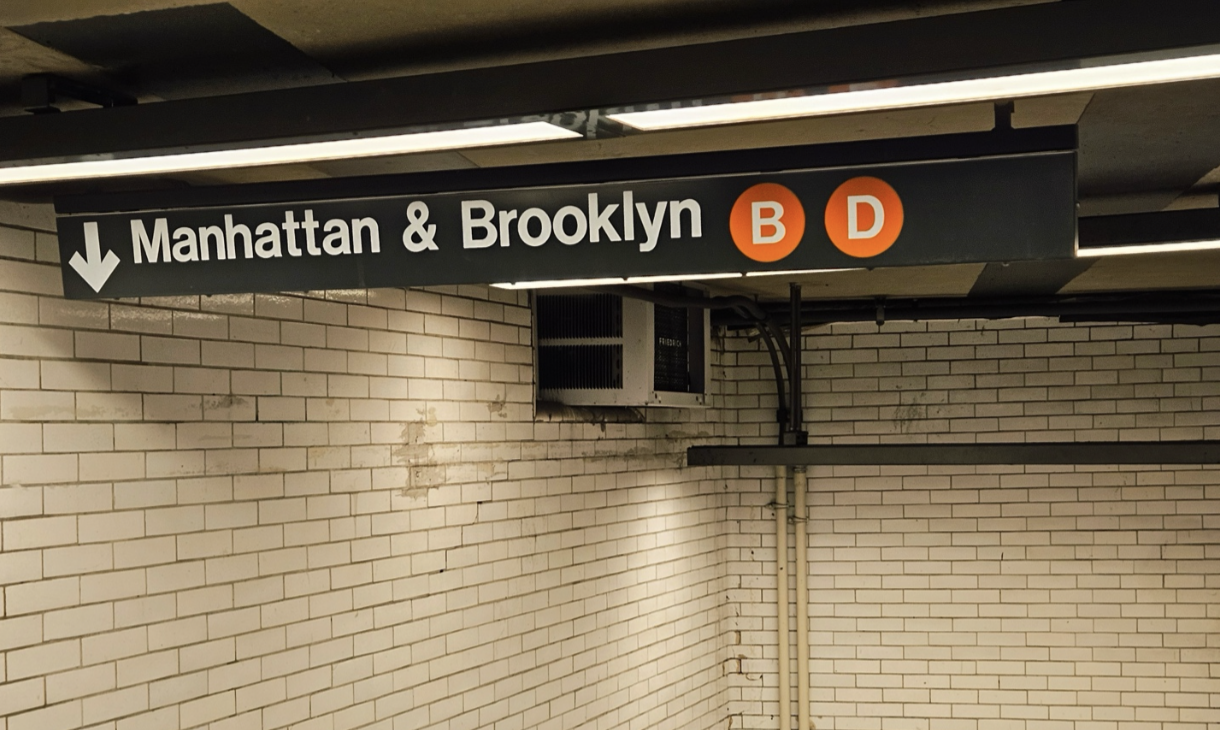
34st–Herald Square
Going down from 167th street toward the southernmost tip, I drew with an uppercase D, enclosed in a circle, across the island—a long, refracted line, a doodle no one needs. A dot stretched into an orange trace by a ship without water. Its wheels were blades, making friction and squeals over mumbling, curious gazes, and breaths already on their way to being untraceable.
It was when my consciousness was loosening into that entangled anonymity that I saw Yechan. He stood not far from the door. I noticed his violin case first, covered with fake leather. He must be in his thirties now. He was in a khaki-colored bomber jacket and grey sweatpants. I could not remember when he had entered the car. Last time I saw him in Seoul, he was having a recital as an emerging artist. I had no idea what he was doing in the Bronx.
When our eyes met, he smiled with a confidence that startled me, and began walking toward me.
“Jane,” he said. “What are you doing here?” My name was not Jane. He must have been speaking to someone behind me. I turned only to see no one was sitting there. When I looked back, he was already sitting next to me, still smiling. In college, I had once thought of him as something like a secret prince. A person I knew only from a distance and never properly spoke to. Several years after, I erased myself with estrogen. I died in Seoul.
I decided to be Jane for the ride. “I am doing my writer’s residency here,” I responded. I was embarrassed, however, because I had no idea what this woman named Jane wrote, or if she wrote at all. “Oh! You are a writer now!” Yechan exclaimed, as if something had clicked back into place. “Of course,” he said. “You always said you would.” The train reached the 59th Street Station. The doors opened and closed. People entered and exited, but we remained. My lies sprawled like a lone strand of yarn, unraveled from the skein.
At some point, I told him my husband had recently divorced me. Yechan looked genuinely shocked. “But you said you’d never get married.”
“Did I?” I asked, making a little frown in my forehead, pretending to be someone trying to remember what they said. “You did,” he chuckled. “Well, I can’t remember that far … but I do know that … you said something like it was hard to find someone online.”
I laughed. “Online? That is an awkward thing to say.” Yechan laughed, then stopped. For a moment, his face looked grey, like a reflection in filthy glass. “Are you okay?” I asked. He nodded his head instead of answering. “By the way,” he said, “are you happy here?” I said yes too quickly. I said I liked that no one recognized me. That people didn’t care enough to try.
At 34st-Herald Square, he stood up. “I get off here,” he said, slipping the strap over his right shoulder. “Good luck.”
“Wait,” I said. “Can we at least exchange numbers? Where are you going?”
He looked at me as if I had asked something slightly offensive.
“I don’t have a phone here.”
“What?”
But the doors were already opening. Yechan stepped out, and the crowd closed around him. I stood and followed, but on the stairway there were only other faces, other jackets, and other bags repeating themselves.
That night, I searched his name on Google. I tried different keywords. Yechan, violinist, artist residency, and South Korea. A photo of someone with the same name appeared. Nothing that matched. Not even a badly focused photograph. I closed the browser. In the dark, I thought of the way he said my name, the wrong one, with such certainty and delight. Jane felt like a fragment of a city, of Seoul, or of this one, that still existed somewhere, and had not yet been told to disappear.
Joey Junsu Hong is an emerging writer and researcher. Their creative nonfiction has been published in drip literary magazine, and their poems appeared in Blood+Honey. Their other writings can be found in Visible, Shirley Jackson Studies, and more. Joey writes to give shape to feelings that resist containment such as shame, humiliation, and anger, believing that storytelling can soften the weight of undeserved suffering.